-
Mail Us Todaysales@efpcb.com
-
Company LocationShenzhen, Guangdong, China
-
+86-755-23724206Call us for more details
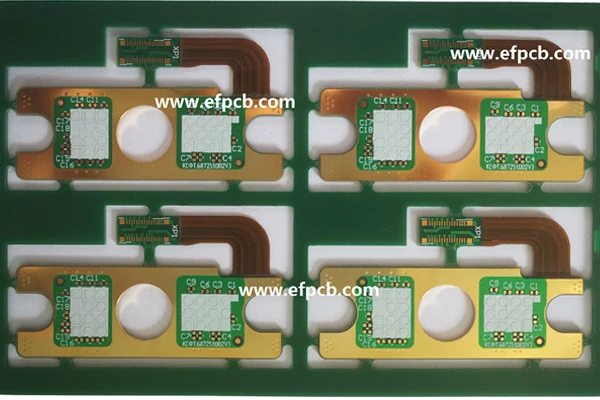
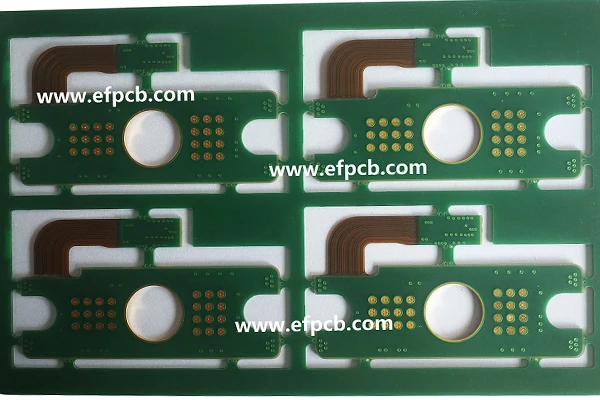
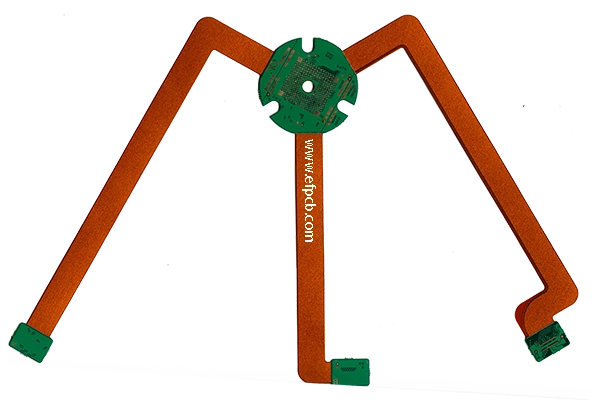
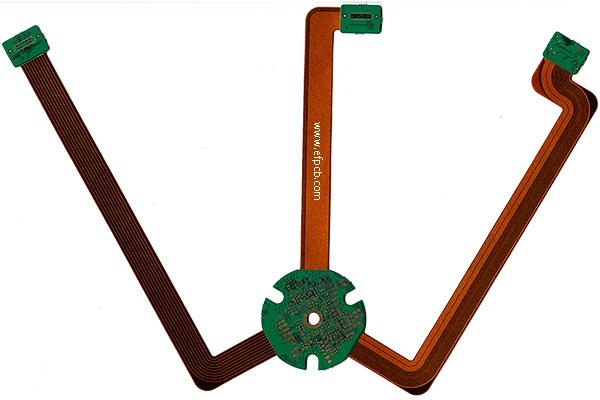
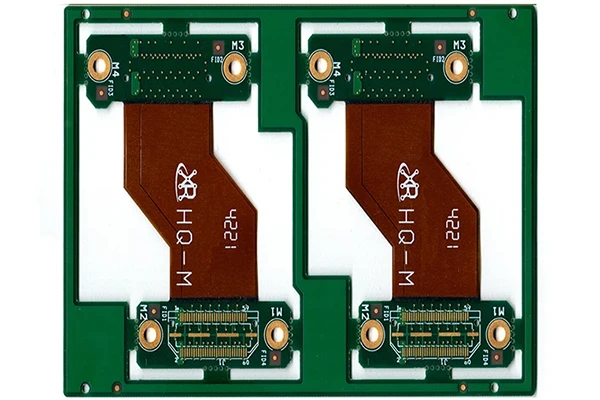
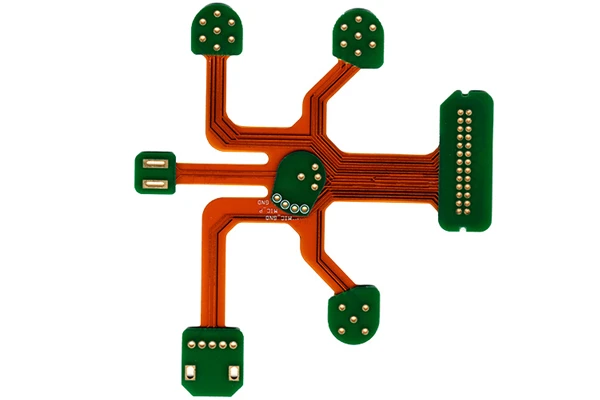
Layer count: 8 layer
Material: FR4, 1.6mm, TG 180 + 2 mil PI, 1 OZ for all layer
Minimum track: 4 mil
Minimum space(gap): 5 mil
Minimum hole: 0.25mm
Surface finished: ENIG
Panel size: 228*158mm/3up
Hard Gold plating Au > 32U", Via on Pads (expoxy plugging vias, copper capping)
In today's electronics world, the need to have smaller, more reliable and better-performing devices has led to much advancement in the field of printed circuit boards (PCBs). Rigid flex PCBs are one of that technology which offers a great deal of possibilities in number of applications where strength, flexibility and bonding the two ends is crucial. Among them, hard gold rigid flex PCBs are a unique category that provides superior electrical, mechanical, and thermal performance for demanding applications. But what is a hard gold Rigid flex PCB and why is it considered a necessity in some industries? Let's get into the detail.
Rigid flex PCB is a type of multilayer PCB, which combines the best qualities of rigid and flexible material in the same circuit. It is made of several rigid and flexible layers bonded together becoming a best solution for applications that demand bending while offering more rigidity in other portions of the circuit. This combination of fabrication techniques also enables high-performance products that address significant challenges in terms of space limitations, weight reduction, and mechanical strain. Now adding “hard gold” to the mix, it's a certain type of surface finish that is used on the contact areas of a PCB like pads and connectors. Hard gold (electroplated gold) is a gold and nickel coating that is very resistant and long-lasting. This plating finish is most suitable in applications where the metallic components are mechanically engaged regularly, eg. Rigid flex PCBs connectors, edge contacts, key pads. The hard gold layer provides superior conductivity, resistance to corrosion, and long-term reliability, even in severe conditions.
Service Life and Durability
The excellent strength of hard gold means it is appropriate for use in PCBs that need to endure continuous mechanical contact or friction. Hard gold is a much harder surface finish than soft finishes like immersion gold, and it does not degrade over thousands of mating cycles.
Electrical Conductivity superior
The gold layer in hard gold rigid flex PCBs has high electrical conductivity that results in low resistance, reliable signal transmission. It's especially critical in high-speed, high-frequency applications where signal integrity is essential.
Hard gold is a dense and impervious material with excellent oxidation and corrosion resistance that allows it to be used in environments where extreme heat, cold, or other adverse conditions exist, including those in the aerospace, medical device, and industrial equipment fields. This protection means that the PCB is able to perform over time, even in adverse environments.
Strengthened Mechanical Property
The rigid flex PCB itself offers the mechanical strength and hard gold surface finished will add an extra layer protection to the crucial parts (connectors and contacts), e.g. this combination makes it possible for the PCB to be exposed to mechanical stress and vibration without losing functionality.
Space and Weight Saving
With rigid flex PCBs, one of the major benefits is the reduction of space and weight in electronic products. Rigid-flex PCBs combine rigid and flexible substrates in a single integrated board, allowing the elimination of bulky connectors and cables and making designs more compact and lighter weight.
The hard gold rigid flex PCB is widely used in many fields and industries, especially where reliability, lifetime and performance is vital. Some of the most typical applications follow:
Aerospace and Defense: Hard gold rigid flex PCBs are utilized in avionics, communication systems and navigation equipment within aerospace systems where high reliability, extreme environmental conditions and the need for weight and size reduction are the driving factors.
Medical Devices: Accuracy and dependability are imperative in a medical device, whether it be a pacemaker, hearing aid or diagnostic instrument. Hard gold rigid flex PCBs provide the required functionality and durability for these applications.
Consumer Electronics: Whether it is a smartphone, the latest VR headset, gaming peripheral or a wearable device rigid flex PCBs are an essential building block enabling compact designs without compromising on durability or performance. The hard gold plating also guarantees stable connections for frequently used instruments and coffee makers.
Automotive Electronics: With the Auto Industry's aggressive push to more advanced electronics and control modules, hard gold rigid flex PCBs are making significant inroads into infotainment systems, sensors, and control modules.
Industrial Equipment: Hard gold rigid flex PCBs are also employed in industrial applications for all types of equipment, from power supplies to test instrumentation.
1. Why is hard gold used in rigid flex PCBs?
Hard gold is used in rigid flex PCBs as it offers a robust, wear resistant surface finish which enables consistent electrical connections, even after mechanical interactions. It has good electrical conductivity and excellent corrosion resistance, is suitable for use in special occasions.
2. What is the difference between rigid flex PCB and rigid PCB?
A rigid flex PCB has rigid and flexible layer combinations in a single board, which can be bent to fit very small spaces, but also can be maintained strong structure. This design eliminates connectors and cables, which reduces the size and weight over the traditional PCB.
3. Which industries are the best customers for hard gold rigid flex PCBs?
The rigid flex PCB application for hard gold used is widespread in aerospace, medicine, automotive, consumer electronics, and industrial instrumentation. Rigid flex PCBs spanned a multitude of processes and technologies, including the following, among others: specialty plating, hard gold and soft gold, wire bonding pads, aux markings.
4. Are hard gold rigid flex PCBs expensive?
Although the hard gold plating increases the cost of production, long term the benefits such as longer life, reliability and lower maintenance cost usually justifies the upfront investment. They are also particularly economical in applications with high performance and that have a high number of mechanical contacts.
5. How to hard gold rigid flex PCB?
Hard gold is deposited by electroplating where there is a first layer of nickel deposited on the contact areas and then a layer of gold. This guarantees a long lasting, even film of the application.
Hard gold rigid flex PCBs are the high-end of rigid flex PCB technology, which has the space-saving and flexible features of rigid flex combined with a hard gold finish to offer exceptional durability and performance. These PCBs are the top choice for the high-end electronics of the devices that each industry rely on where they need high reliability, efficiency, and long-lasting performance. In aerospace, medical devices or consumer electronics, the special characteristic hard gold rigid flex PCB is truly the vital element of today's high-end technology.
Designers and engineers are capable of making right decisions when choosing PCB solutions for their project. This one innovation has the potential to break new ground in how electronic devices are engineered, making them smaller, more reliable and higher performing.