-
Mail Us Todaysales@efpcb.com
-
Company LocationShenzhen, Guangdong, China
-
+86-755-23724206Call us for more details
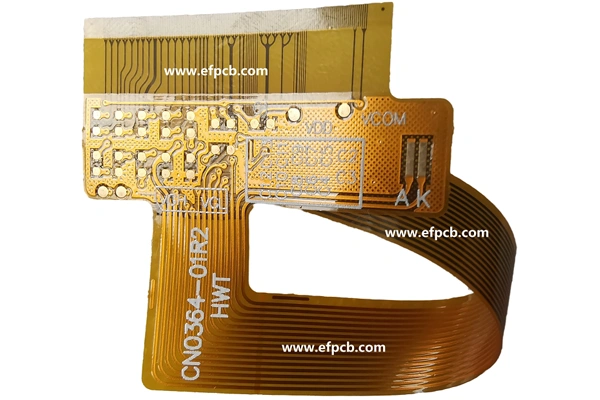
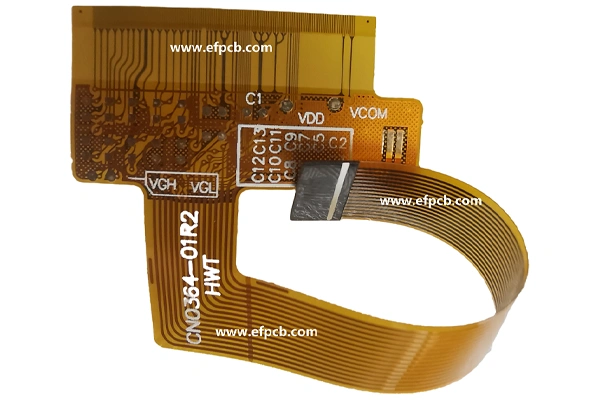
Part No.: E0215060171A
Layer count: 2 layer FPCB
Material: Polymide 1mil, 0.5 OZ for all layer
Minimum trace: 3.5 mil
Minimum space: 3.5 mil
Minimum hole: 0.15mm
Surface finished: immersion gold
Panel size: 68*133.5mm/1up
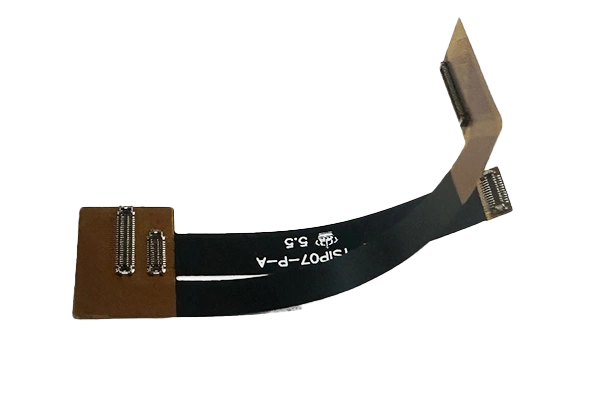
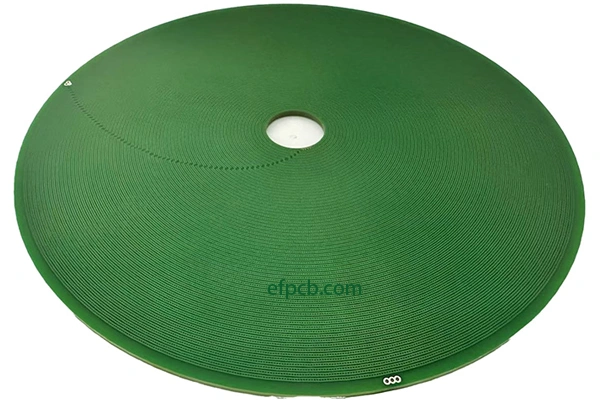
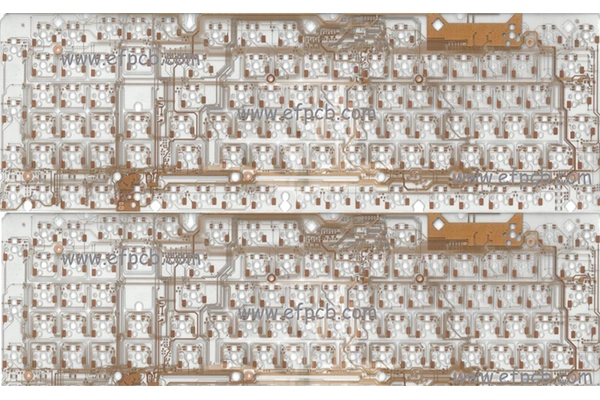
Flexible printed circuit boards (FPCBs) are essential parts in modern electronics. They are offering lightweight, flexible, and compact solutions for advanced devices. Their ability to bend and conform to complex shapes makes them ideal for applications where space-saving designs and durability are critical. From consumer electronics to medical devices, FPCBs are widely applied to industries, including iPhone repairing where precision and reliability are paramount. As a trusted FPCB manufacturer, High Quality PCB specializes in delivering high quality solutions
An FPCB is a type of circuit board made of flexible materials, such as polyimide or polyester film, which allow it to bend, fold, and twist without damaging the circuitry. Unlike rigid PCBs, FPCBs are designed for compact and dynamic applications, making them ideal for devices like smartphones, wearables, and advanced electronics. In iPhone repairing, FPCBs play a crucial role in maintaining the device's functionality while enabling compact designs.
As an experienced FPCB manufacturer, we produce flexible printed circuit boards that offer superior performance, durability, and reliability. Our products are trusted for applications like iPhone repairing where precision and long-term functionality are essential.
The manufacturing of FPCBs involves a series of intricate and carefully controlled steps. Each stage is designed to ensure the final product meets the highest standards of quality and performance.
Material Selection and Preparation
The first step in manufacturing FPCBs is selecting high-quality materials. Polyimide is the most common base material due to its excellent flexibility, thermal stability, and resistance to chemicals. Copper foil is used for the conductive layers, while adhesives and coverlays protect the circuitry and enhance durability.
As a leading FPCB manufacturer, we use premium materials to ensure our products meet the rigorous demands of applications like iPhone repairing. Our materials are carefully chosen for their ability to withstand repeated bending and flexing without compromising performance.
Circuit Patterning
Circuit patterning involves creating the electrical traces on the FPCB. This process begins with applying a photoresist layer to the copper foil, followed by exposing it to light through a mask to transfer the circuit design. The unprotected copper is then etched away to form precise circuit patterns.
We use advanced laser direct imaging (LDI) and fine-line etching technologies to create intricate circuit designs with exceptional accuracy. This ensures that our FPCBs meet the high-density interconnection requirements of modern devices, including those used in iPhone repairing.
Drilling and Via Formation
Drilling is used to make vias, small vias that connect different layers of the FPCB. These vias are plated with copper to ensure reliable electrical conductivity. For applications, like iPhone repairing where compact designs are vital, the vias must be small and precisely aligned.
Our expertise as an FPCB manufacturer allows us to implement advanced via technologies, such as microvias. These solutions enable higher interconnect density and improved electrical performance, supporting the needs of compact electronic devices.
Lamination and Layer Bonding
In multilayer FPCBs, individual layers are laminated together using heat and pressure. This process ensures strong adhesion between layers while maintaining the flexibility of the circuit board. For applications like iPhone repairing, the lamination process must balance durability and flexibility.
Our lamination processes are optimized for precision and uniformity, resulting in FPCBs that can withstand repeated bending and twisting without failure. This makes our products ideal for demanding applications in compact electronic devices.
Surface Finishing and Protective Coating
Surface finishing is applied to protect the copper traces and improve solderability. Common finishes include electroless nickel immersion gold (ENIG) and organic solderability preservatives (OSP). A protective coverlay or flexible solder mask is added to shield the circuitry and enhance the PCB durability.
We offer advanced surface finishing and protective coating options that ensure excellent solderability, corrosion resistance, and long-term reliability. These features make our FPCBs ideal for applications like iPhone repairing.
Quality Control and Testing
The final step in manufacturing FPCBs is rigorous quality control and testing. This includes electrical testing, dimensional inspection, and mechanical stress testing to ensure the FPCB meets all specifications and performs reliably in its intended application.
As a trusted FPCB manufacturer, we employ advanced inspection tools, such as automated optical inspection (AOI) and X-ray imaging, to detect defects and ensure consistent quality. Every FPCB undergoes extensive testing to guarantee optimal performance, even in demanding applications like iPhone repairing.
Our FPCBs are designed to meet the unique challenges of modern electronics. Here are some key features that set our products apart:
The FPCB manufacturing is a complex process that requires precision, advanced technology, and a commitment to quality. As a trusted FPCB manufacturer, we combine innovation, expertise, and advanced facilities to deliver products that meet the highest standards of performance and reliability.
Our FPCBs are designed to support the demands of modern electronics, providing the flexibility, durability, and electrical performance needed for applications such as iPhone repairing. By partnering with us, customers gain access to high-quality FPCBs that enable innovation, ensure reliability, and meet the challenges of today’s most advanced devices.